
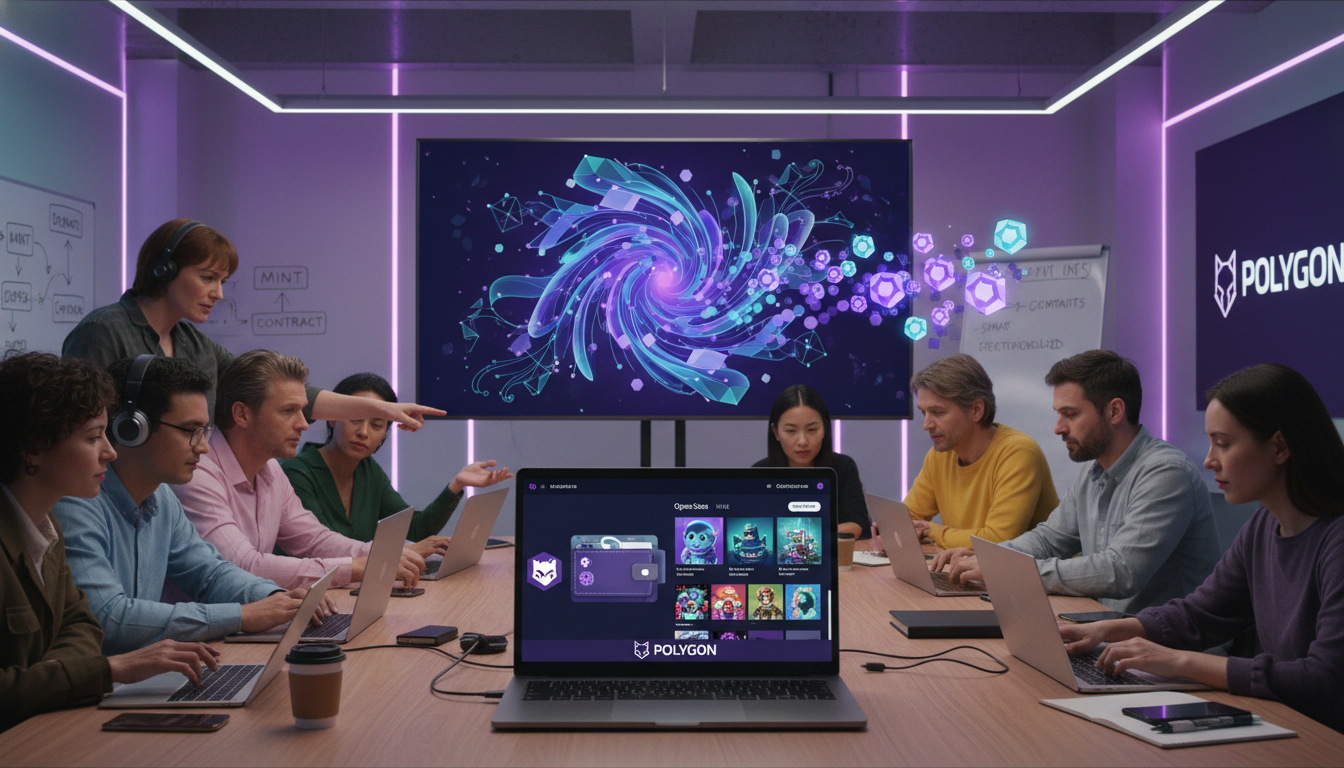
Paula Pettit and I ran a masterclass for the BIMA Blockchain Council in December 2022 called "Never Mind the Buzzword" – focused on cutting through the hype and actually teaching people how to create NFTs.
BIMA’s audience is agencies, brands, and digital professionals. Most had heard about NFTs. Heard the stories about million-dollar JPEGs. Heard the buzzwords. But hadn’t actually done anything with the technology.
We fixed that. This was a practical, hands-on workshop where participants went from "What’s a wallet?" to "I just minted my own NFT" in about 90 minutes.
So yeh. Let me walk you through what we covered.
Why "Never Mind the Buzzword"
By December 2022, NFT discourse was exhausting.
The hype cycle had peaked. Bored Ape prices were down. Crypto winter was in full effect. Every conversation about NFTs devolved into either:
- "They’re revolutionary and will change everything!"
- "They’re a scam and completely worthless!"
Both positions are boring and unhelpful.
The title "Never Mind the Buzzword" was deliberate. Stop arguing about whether NFTs are good or bad. Just learn how the technology actually works. Make one yourself. Then decide what you think.
Paula and I wanted people to have direct experience rather than just opinions formed from headlines.
The Structure
We organized the masterclass into four sections:
1. Introduction to NFTs and Their History
What’s an NFT? Non-Fungible Token. A unique digital asset on a blockchain. Provably scarce. Verifiably owned.
Unlike cryptocurrency (where one Bitcoin equals any other Bitcoin – "fungible"), NFTs are unique. This specific token is different from that specific token.
Why do they exist? Digital scarcity was impossible before blockchain. You could copy a JPEG infinitely. NFTs solve this – not by preventing copies, but by establishing which copy is the "original" or "official" version.
History speedrun:
- CryptoPunks (2017) – 10,000 unique pixel art characters. Pioneering project.
- CryptoKitties (2017) – Collectible cats that broke Ethereum with demand.
- NBA Top Shot (2020) – Video highlight moments as NFTs. First mainstream adoption.
- Beeple’s $69M sale (2021) – The moment NFTs hit mainstream consciousness.
- Bored Ape Yacht Club (2021) – Profile pictures as status symbols and community membership.
- The crash (2022) – Speculation unwinds, prices collapse, but builders keep building.
We covered this quickly. History is context, not the goal.
2. Blockchain Fundamentals: Wallets, Security, Marketplaces
This is where rubber meets road. You can’t create an NFT without understanding wallets.
Wallets:
- MetaMask – Browser extension, easiest starting point
- Private keys – Control your assets. Lose them, lose everything. No customer service to call.
- Seed phrases – 12-24 words that restore your wallet. Write them down. Don’t take screenshots. Never share them.
We had people actually install MetaMask. Walk through the setup. Understand what "connecting your wallet" means.
Security:
- Never share seed phrases. Period.
- Phishing is rampant. Fake websites, fake Discord messages, fake customer support. Verify URLs obsessively.
- Hardware wallets (like Ledger) for serious money. MetaMask for experimentation.
- Gas fees – You pay transaction fees on Ethereum. They vary wildly. Check before confirming transactions.
Marketplaces:
- OpenSea – Biggest marketplace, most liquidity
- Rarible – Community-owned alternative
- Foundation – Curated, artist-focused
- Polygon-based options – Lower fees, faster transactions
We showed people how to browse OpenSea, understand listings, and see transaction history on Etherscan (the block explorer).
This foundation is critical. You can’t safely participate without understanding wallets and security.
3. Hands-On: Creating Your Own NFT on Polygon
This was the main event. Everyone creates an NFT.
Why Polygon?
- Low fees – Minting on Ethereum mainnet can cost $50-200 in gas fees. Polygon costs pennies.
- Fast transactions – Ethereum takes minutes. Polygon takes seconds.
- Same technology – Polygon is an Ethereum Layer 2. Same tools, same wallets, same standards.
The process:
- Create or choose artwork – JPEG, PNG, GIF, video, audio. NFTs support multiple formats.
- Connect wallet to OpenSea (Polygon network)
- Click "Create" – Upload file, add title, description
- Add properties/traits – Optional metadata that appears on the NFT
- Choose collection – Create new or add to existing
- Mint – Sign the transaction, pay minimal gas fee (cents)
- Done – Your NFT exists on-chain, viewable in your wallet and on OpenSea
We walked through every step together. Troubleshot wallet connection issues. Explained error messages. Made sure everyone successfully minted something.
The something didn’t matter. Could be a selfie, a logo, a meme. The point was experiencing the process.
4. Community Participation and Case Studies
NFTs aren’t just collectibles. They’re community access tokens.
Case studies we discussed:
Bored Ape Yacht Club:
- Own the NFT = Access to exclusive Discord, events, collaborations
- IP rights granted to holders – use your ape commercially
- Community-driven value rather than just artwork value
Proof Collective:
- NFT as proof of membership in collector community
- Benefits include early access to drops, IRL events
- Different model – utility through access, not just aesthetics
Gaming NFTs:
- In-game items as NFTs – truly owned by players
- Tradeable across games (potentially)
- Play-to-earn models (controversial but interesting)
Music NFTs:
- Artists selling limited edition songs, albums
- Direct artist-fan relationships
- Royalties on secondary sales
Event tickets:
- NFTs as tickets – provable attendance, prevent counterfeiting
- Collectible even after event ends
- This connects to POAPs (which we’d cover more deeply in a later masterclass)
We emphasized: NFTs succeed when they create community value, not just speculation value.
What Made This Work
The hands-on format was key. Not a lecture. Not a pitch. A workshop.
People came in skeptical. "Aren’t NFTs dying?" "Isn’t this all a scam?" "Why would I pay for a JPEG?"
They left with functioning wallets, actual NFTs they’d created, and firsthand experience with the technology.
Some still thought NFTs were overhyped. Fair. But now it was an informed opinion based on direct experience rather than headlines.
Others were excited. "Oh, I see how brands could use this for loyalty programs." "This could work for digital credentials." "My artist friends should know about this."
Both reactions are valuable.
Paula’s Co-Hosting
Paula Pettit is brilliant at making technical concepts accessible without dumbing them down. Her background in agencies meant she understood the BIMA audience’s perspective – busy professionals who need to understand emerging tech but don’t have time for rabbit holes.
She handled a lot of the practical troubleshooting during the hands-on section. "My MetaMask won’t connect." "I don’t see the Polygon network option." "The transaction failed."
These aren’t interesting problems for experienced crypto users. But they’re critical problems for newcomers. One failed transaction can turn someone off the technology entirely.
Paula’s patient, practical support made the difference between people giving up and people succeeding.
What I Learned
Teaching people to create NFTs reveals all the UX problems immediately.
Wallets are confusing. "Why do I need a browser extension?" "Where does my money actually live?" "What if I uninstall this?"
Gas fees are unpredictable. "It said it would cost $2 but now it says $8?" "Why am I paying fees when this is supposed to be free?"
Error messages are cryptic. "Transaction failed: insufficient funds for gas * price + value." What does that mean?
Network switching is unintuitive. "I’m on Polygon but OpenSea shows Ethereum prices." "How do I know which network I’m on?"
These problems don’t exist for crypto-natives who’ve internalized the mental models. But they’re massive barriers for everyone else.
If NFTs are going to reach mainstream adoption (beyond speculation), these UX problems need solving. Badly.
The BIMA Context
BIMA represents brands and agencies. For them, NFTs aren’t about investment or speculation. They’re potential tools:
Marketing: Brand collectibles, limited edition drops, fan engagement
Loyalty programs: NFT-based rewards, tiered access, community building
Digital rights management: Provable ownership of digital assets, licensing, royalties
Event management: Tickets, access control, attendance verification
The masterclass helped them evaluate these possibilities with actual understanding rather than just buzzword bingo.
Some will experiment. Some will wait. Some will decide it’s not relevant to their business. All are making informed decisions.
That’s the goal.
Follow-Up
This masterclass was part of an ongoing series. Paula and I would later do a POAP-specific workshop (March 2023) focusing on event NFTs rather than general NFT creation.
Different use case, different audience needs, different technical considerations. But same philosophy: hands-on experience over abstract discussion.
The BIMA Blockchain Council exists to educate the UK’s digital industry about Web3 technologies. "Never Mind the Buzzword" embodied that mission perfectly.
Event: Never Mind the Buzzword x BIMA Blockchain Council
Topic: Create Your Own NFT (Hands-On Masterclass)
Date: December 15, 2022
Co-hosts: Paula Pettit, Dave Lockie
Organization: BIMA (British Interactive Media Association)
Format: 90-minute practical workshop
Platform: Polygon (Ethereum Layer 2)
Access: Gated through BIMA resources portal
Find me: Contact form, @divydovy most places, hi@divydovy.com
Note: This was one of several Web3 education initiatives I co-led with the BIMA Blockchain Council in 2022-2023. The "Never Mind the Buzzword" title reflected our commitment to practical education over hype. If people are going to form opinions about NFTs, let them be informed opinions based on experience.